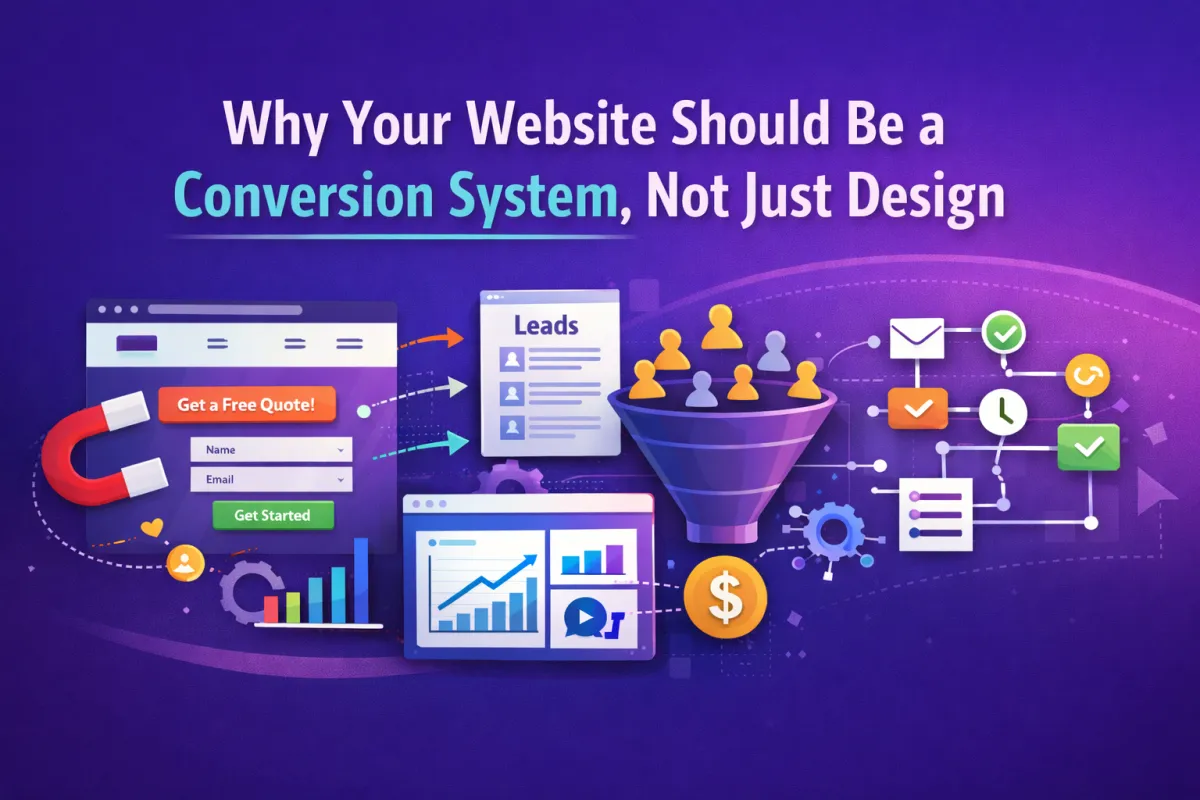
Why Your Website Should Be a Conversion System, Not Just Design
Most business websites look good.
Clean layout, nice colors, modern fonts.
But here’s the real question:
👉 Is your website actually generating leads, calls, or bookings consistently?
For many service-based businesses in the U.S., the answer is no.
That’s because a website should not exist just to look professional —
it should function as a conversion system.
Most Websites Look Good — But Don’t Convert
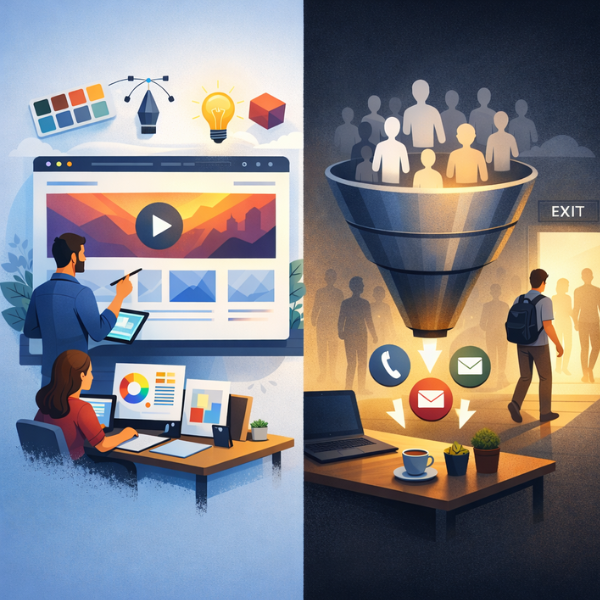
A common mistake businesses make is treating their website like a digital brochure.
They focus on:
Design trends
Animations
Visual aesthetics
But they forget the most important goal:
👉 Turning visitors into leads.
A beautiful website without a conversion strategy is just decoration.
Traffic comes in… and quietly leaves.
What Is a Website Conversion System?
A website conversion system is a website designed with one purpose:
Guide visitors to take action — automatically.
Instead of simply displaying information, a conversion system:
Captures leads
Qualifies visitors
Encourages contact
Triggers follow-up
Feeds your CRM
It works 24/7, even when you’re not.
The Problem With “Design-Only” Websites
Design alone doesn’t answer key questions your visitors have:
What should I do next?
Why should I trust this business?
How do I get in touch quickly?
What happens after I submit a form?
Without clear structure, users feel friction — and friction kills conversions.
That’s why many businesses invest in ads but see poor results:
their website is not built to support conversion.
Key Elements of a High-Converting Website
A true conversion-focused website includes:
1. Clear Calls to Action (CTAs)
Your website should guide users clearly:
Book a call
Request a quote
Send a message
Schedule an appointment
No guessing. No confusion.
2. Strategic Layout & Copy
Good copy explains:
Who you help
What problem you solve
Why your solution works
Every section should move the visitor closer to action.
3. Lead Capture Forms
Forms should be:
Simple
Easy to complete
Strategically placed
They exist to start a conversation, not to collect unnecessary data.
4. Automation & Follow-Up
What happens after someone submits a form?
A conversion system triggers:
Instant confirmations
Automated follow-ups
SMS or email responses
Speed matters — especially in competitive U.S. markets.
5. CRM Integration
Your website should connect directly to your CRM so you can:
Track leads
See conversion sources
Follow up efficiently
Improve performance over time
Without a CRM, leads fall through the cracks.
Why Conversion Systems Matter for Service Businesses in the U.S.
In industries like:
Law firms
Medical & aesthetic practices
Contractors & home services
Consultants & agencies
Competition is high.
A conversion system gives you an edge by:
Responding faster than competitors
Capturing leads others miss
Turning traffic into real opportunities
How Digitarks Builds Websites That Convert
At Digitarks, we don’t just design websites.
We build conversion ecosystems.
Our websites are:
Strategy-driven
Conversion-focused
CRM-connected
Automation-ready
Every website is designed to support growth — not just branding.
Final Thoughts: Your Website Should Work for You
Your website should not just exist.
It should:
Generate leads
Support sales
Automate follow-up
Scale with your business
If your website isn’t doing that, it’s time to rethink its role.
Ready to Turn Your Website Into a Conversion System?
Want to see what your website should be doing better?
Book a free strategy audit, and we’ll show you exactly how to turn your website into a conversion system — not just a design.
